

Bricolage is an award winning architectural studio led by Will Howard. We make, and remake, buildings and spaces that are enduring, evocative, and serve both people and the planet.
About
What we do:
Bricolage offer services in architectural design at all RIBA stages, including interior design and fit-out. We also enjoying working with people and communities to offer a self-build advisory service, sharing our experience in negotiating this process, from finding a site, exploring financing, and early feasibility appraisals.
What sets us apart is a rare combination of design intelligence, construction experience and strategic thinking. We work directly with materials, sites and communities, championing reuse and adaptation. We tread lightly and often take on the responsibility of producing built projects ourselves.
We work with councils, offer design advice, lead research, write guidance and collaborate across disciplines to explore better ways of building. This strategic work informs our design practice, and vice versa. We aim to break out of silos, find common language, and seek alternative models of working that lead to more equitable outcomes.
We teach, speak, write and contribute to wider industry conversations. Advocacy is central to how we work, whether through collective initiatives or quiet persistence, and is part of how we support change towards a better future.
What we care about:
Founded with purpose, Bricolage responds to the urgent challenges of our time: climate breakdown, biodiversity loss, resource scarcity, and deepening inequality. Building today comes with real costs. Our role is to tread lightly, build carefully, and focus on repair as much as creation. We shape environments that are not only functional and beautiful, but deeply responsible.
We work with likeminded clients who understand that building with integrity is both essential and rewarding. We believe in a hopeful future: one where homes are resilient, cities thrive as ecosystems, and construction is guided by care rather than excess.
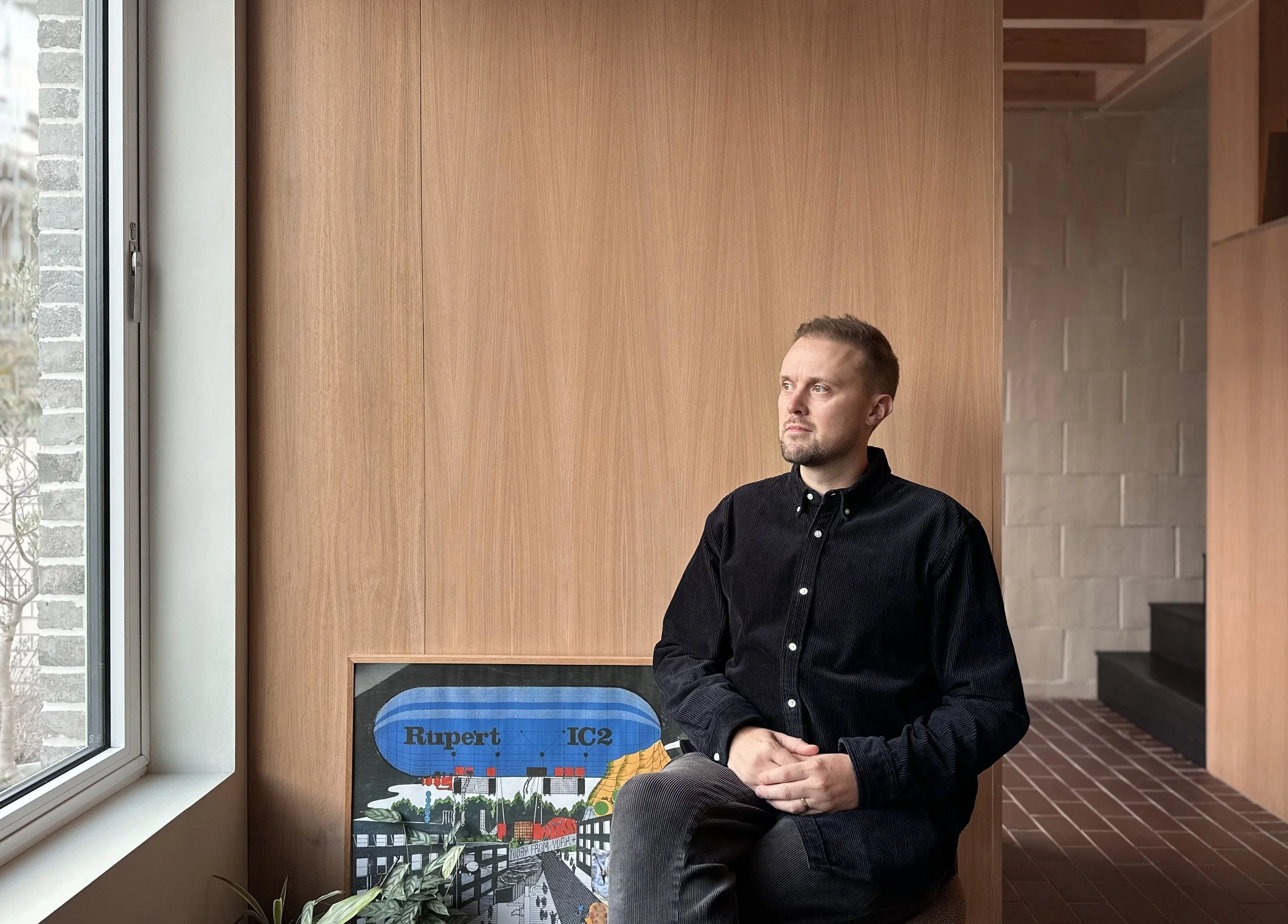
About Will
Will is an architect with 18 years of experience creating sustainable and joyful buildings. He founded Bricolage in 2025 and combines practice with teaching, at the University of Reading. Previously an Associate Director at dRMM, he led many progressive urban projects across London and the UK.
Will brings a distinctive mix of strategic thinking, design flair and hands-on making to his work. In 2023, he self-built Castlands Road, a home for his young family, taking on the roles of developer, architect, project manager, contractor and maker. As well as both managing and carrying out much of the build directly, he also designed and crafted all of the bespoke joinery, giving the project a rare level of personal detail and care.
In his 11 years at dRMM, Will developed a strong focus on housing and mixed-use projects, delivering significant schemes for notable clients. He was Project Architect for 415 Wick Lane, one of the first completed projects to co-locate 175 homes with B2 industrial space, and for Plot 15 at Brent Cross Town, a Build to Rent scheme with homes, wellbeing-focused amenities and a parade of High Street shopfronts.
His experience also includes leading timber frame mid-rise Passivhaus housing, and dRMM’s contribution to 980 Great West Road, a mixed-tenure residential building above a retained basement structure as part of a retrofit-first masterplan by Haworth Tompkins.
Will works with curiosity and playfulness, underpinned by deep technical rigour. He values hands-on craftsmanship and engagement with tradespeople and local communities. He has lectured at the AA, University of Reading and University of Salford, and offers careers advice to those entering the profession. He sits on the Lewisham Design Review Panel, and the Brighton & Hove DesignPLACE Panel, and the DSE Panel, and is committed to delivering enduring, meaningful and equitable projects.
Awards & Competitions
Press
FAQ
-
Possibly. It depends on the size of the site, access, neighbouring homes, overlooking, daylight, trees, servicing, planning policy and design quality. Many back-garden and small infill sites have potential, but they need to be tested carefully before too much money is committed.
-
Yes. Early advice is often most useful before you buy land or agree terms. We can help you look at the site, understand the main planning risks, consider what might reasonably fit, and decide whether the project is worth pursuing.
-
No. Self-build can mean different levels of involvement. Some clients physically build parts of the project themselves. Others manage the process more closely while appointing trades or a contractor. The important thing is to be honest about time, skill, risk and appetite from the start.
-
It can be, but it is not easy, the land, planning, construction costs and finance all need to be carefully thought about. Castlands Road became possible through a combination of direct site-searching, a careful planning strategy, a simple and buildable design, and a hands-on approach to delivery.
-
We are interested in small, overlooked and awkward urban sites, including long gardens, backland plots, side plots, infill sites, leftover land and sites with complicated constraints.
-
Yes. A previous refusal does not always mean a site has no potential. It may show that the principle of development is possible, but that the previous design, scale, access, neighbour relationship or planning argument was not right. We can help review the history and identify the real issues.
-
As early as possible. The most important decisions are often made before a design exists: whether to buy the site, what budget is realistic, what planning risk you are taking on, what kind of brief makes sense, and what route to construction is likely to work.
-
No. Bricolage works across London and beyond. Lewisham, Catford and south London are central to our own self-build experience, but the same small-site, low-energy and resourceful design thinking can apply elsewhere.
-
Yes. We can help you think through what is realistic to take on yourself and what is better left to specialist trades. The right answer depends on your skills, time, budget, family circumstances, appetite for risk and the complexity of the project.
-
Every site is different. Early advice is usually much cheaper than buying the wrong plot, pursuing the wrong design or discovering too late that the project does not stack up. Once we understand the site and what you need, we can suggest the right level of input.
-
Send us the site address or location, a few images, any planning information you have, and a short note explaining what you are trying to do. We can then help you understand the right next step.